


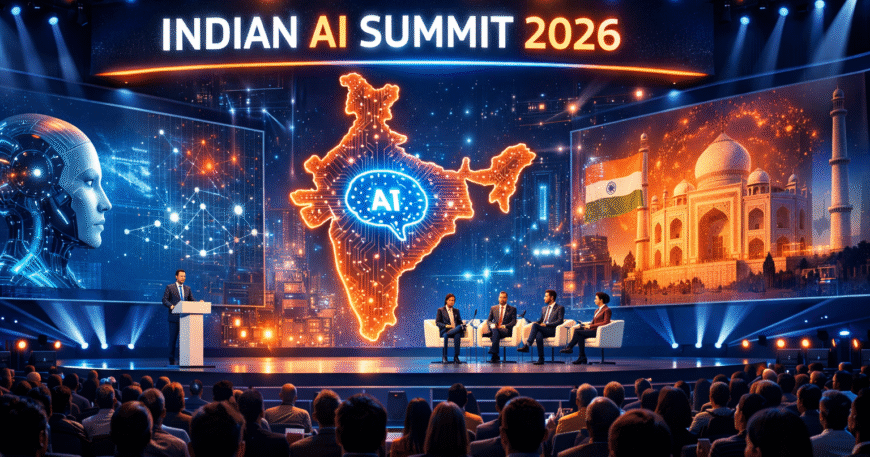
The Indian AI Summit 2026 reflects a broader national ambition—to position India as a global AI innovation hub. The conversations emerging from the summit show that India is transitioning from being a service-driven IT powerhouse to becoming a creator of AI-first solutions.
From Digital India to Intelligent India
Over the past decade, India invested heavily in digital infrastructure. Now, that foundation is enabling AI deployment at scale across:
- Healthcare systems
- Banking and financial services
- Manufacturing ecosystems
- Smart cities
- Agriculture technology
This shift marks the evolution from digital connectivity to intelligent automation.
AI as a National Growth Multiplier
According to global insights shared by the World Economic Forum, AI is expected to contribute trillions to the global economy. India’s demographic advantage, combined with its technology expertise, creates a powerful opportunity to lead emerging AI markets.
Indian AI Summit 2026 reinforced this message: AI is not just about efficiency—it is about economic acceleration.
The Strategic Themes That Defined Indian AI Summit 2026
The summit highlighted several transformational themes that will define the next phase of enterprise AI adoption.
- Responsible and Ethical AI Governance
As AI systems become more autonomous, governance frameworks must evolve.
Key focus areas included:
- Transparent algorithms
- Bias mitigation
- Data protection compliance
- Ethical deployment standards
Responsible AI builds trust—and trust fuels adoption. Enterprises that prioritize ethical frameworks will gain long-term competitive advantage.
- Generative AI and Enterprise Productivity
Generative AI has moved beyond experimentation. Businesses are integrating AI tools into:
- Customer service automation
- Software development
- Marketing operations
- Knowledge management
The summit emphasized that productivity gains from generative AI could redefine operational models across industries.
- AI-Powered Cybersecurity
As cyber threats grow more sophisticated, AI-driven threat detection systems are becoming essential. Predictive analytics and machine learning models are now core components of modern cybersecurity frameworks.
Enterprises that integrate AI into security architecture will reduce risk exposure significantly.
Enterprise Transformation: Moving Beyond Pilot Projects
One of the strongest signals from Indian AI Summit 2026 is the shift from proof-of-concept experimentation to enterprise-scale deployment.
The End of AI as a Side Project
In earlier years, AI initiatives were often confined to innovation labs. Today, AI is becoming embedded in core business functions:
- Supply chain optimization
- Risk modeling
- Demand forecasting
- Customer personalization
Organizations must now think systemically. AI strategy should align with long-term business goals—not short-term technology experiments.
Data as Strategic Infrastructure
AI performance depends on data quality. Enterprises are increasingly treating data as a strategic asset, investing in:
- Data governance frameworks
- Cloud-native architectures
- Real-time analytics platforms
Without strong data foundations, AI cannot deliver sustained value.
India’s Talent Advantage in the AI Era
India’s greatest strength lies in its human capital. The summit underscored the importance of:
- Upskilling programs
- AI certifications
- Industry-academia collaboration
- Research and innovation labs
The demand for AI engineers, data scientists, and automation specialists is growing rapidly. Organizations must adopt continuous learning models to remain competitive.
AI literacy is no longer limited to technical teams. Leadership, operations, and strategy departments must also understand AI fundamentals to drive informed decision-making.
AI for Social Impact and Inclusive Growth
Indian AI Summit 2026 also emphasized AI’s role beyond corporate profits.
Healthcare Innovation
AI-driven diagnostics, predictive health monitoring, and telemedicine platforms are expanding healthcare access across rural regions.
Agricultural Optimization
Smart irrigation systems, crop prediction models, and climate analytics are supporting farmers in improving yield and resilience.
Financial Inclusion
AI-powered credit scoring and digital identity verification systems are enabling broader access to financial services.
This social dimension of AI highlights a critical truth: technology should serve humanity.
The Competitive Imperative for Indian Enterprises
The message from Indian AI Summit 2026 is clear—organizations that delay AI integration risk strategic disadvantage.
Why Immediate Action Matters
- Competitors are scaling AI capabilities
- Customers expect intelligent personalization
- Operational efficiency demands automation
- Global markets reward innovation
Waiting is no longer a safe strategy.
Building an AI-First Roadmap
Forward-thinking enterprises should:
- Conduct AI readiness assessments
- Identify high-impact automation opportunities
- Strengthen data governance
- Invest in workforce upskilling
- Partner with experienced technology providers
AI transformation is not a one-time upgrade. It is a continuous journey.
The Global Significance of Indian AI Summit 2026
The international participation and global attention surrounding the Indian AI Summit 2026 signal India’s growing prominence in AI discourse.
Global investors, technology firms, and research institutions are recognizing India’s:
- Scalable technology infrastructure
- Skilled workforce
- Vibrant startup ecosystem
- Strong IT services legacy
India is no longer just implementing AI solutions developed elsewhere—it is building original innovations that influence global markets.
Frequently Asked Questions (FAQs)
- What makes Indian AI Summit 2026 significant?
It highlights India’s transition toward becoming a global AI innovation leader and showcases enterprise-scale AI adoption strategies.
- How does Indian AI Summit 2026 impact businesses?
It signals that AI integration is now essential for competitiveness, efficiency, and sustainable growth.
- Which industries benefit most from AI adoption?
Healthcare, banking, manufacturing, retail, cybersecurity, logistics, and agriculture are among the primary beneficiaries.
- What is responsible AI?
Responsible AI refers to transparent, ethical, and compliant AI systems that minimize bias and protect user data.
- How can organizations prepare for AI transformation?
By strengthening data infrastructure, investing in talent development, and aligning AI initiatives with long-term strategic goals.
- Why is India emerging as an AI leader?
India combines technological expertise, a vast talent pool, supportive policies, and entrepreneurial innovation.
Conclusion: From Momentum to Mastery
Indian AI Summit 2026 represents more than industry dialogue—it represents national momentum. The shift from experimentation to execution is underway.
Artificial intelligence is not merely enhancing processes; it is redefining value creation. Enterprises that embrace AI responsibly and strategically will shape the future of their industries.
The question is no longer whether AI will transform business.
The real question is: who will lead the transformation?
