


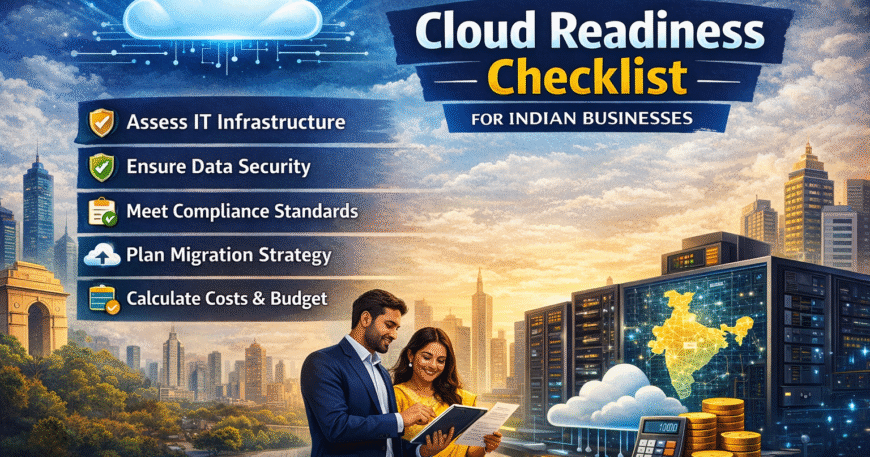
Digital transformation is no longer optional—it’s essential. For organizations across India, moving to the cloud offers flexibility, scalability, and cost efficiency. However, rushing into migration without preparation can lead to downtime, security risks, and unexpected expenses.
This Cloud Readiness Checklist for Indian Businesses will guide you through a structured approach to evaluate whether your organization is truly ready for the cloud. From infrastructure analysis to compliance with Indian regulations, we’ll break down every critical step in simple terms.
Let’s dive in!
Why Cloud Readiness Matters in India
India’s business ecosystem is evolving rapidly. With the rise of startups, SMEs, and enterprise digitalization, cloud computing has become the backbone of innovation.
However, challenges such as:
- Data localization laws
- Regulatory compliance (RBI, SEBI, IT Act)
- Cybersecurity risks
- Network reliability in certain regions
make cloud readiness assessment crucial.
Without proper planning, companies may overspend or expose sensitive data. That’s why preparation is the secret weapon for successful cloud adoption.
Understanding the Cloud Landscape in India
Before jumping into migration, it’s important to understand your options.
Public Cloud
- Cost-effective
- Highly scalable
- Managed infrastructure
Private Cloud
- Greater control
- Enhanced security
- Suitable for regulated industries
Hybrid Cloud
- Combines public and private
- Ideal for gradual migration
Businesses that prepare early gain a competitive advantage.
Step 1: Assess Your Business Objectives
Ask yourself:
- Why are we moving to the cloud?
- Is it for cost savings?
- Better collaboration?
- Faster deployment?
Clearly defined goals ensure that technology decisions align with business strategy.
Step 2: Evaluate Existing IT Infrastructure
Before migration, conduct a full audit:
- Servers and hardware health
- Software dependencies
- Licensing agreements
- Network bandwidth
Outdated systems may need modernization before cloud integration.
Step 3: Analyze Application Readiness
Not all applications are cloud-ready.
Evaluate:
- Performance requirements
- Compatibility issues
- Data storage needs
- Integration complexity
Legacy systems may require refactoring or re-architecting.
Step 4: Data Classification and Security Planning
Data is gold. Treat it that way.
Categorize data into:
- Sensitive
- Confidential
- Public
Then ensure:
- Encryption at rest and in transit
- Role-based access control
- Multi-factor authentication
Security must be proactive—not reactive.
Step 5: Compliance with Indian Regulations
Indian businesses must follow:
- IT Act, 2000
- RBI data storage norms
- SEBI guidelines (for financial institutions)
- DPDP Act (Digital Personal Data Protection Act)
Cloud providers should offer data centers within India if required by regulation.
Step 6: Network Readiness and Connectivity
Cloud performance depends heavily on connectivity.
Check:
- Internet reliability
- Backup connections
- Latency levels
- VPN readiness
A strong network ensures seamless operations.
Step 7: Cost Analysis and Budget Planning
Cloud can reduce CapEx, but OpEx must be monitored carefully.
Consider:
- Subscription costs
- Storage fees
- Data transfer charges
- Migration expenses
- Training costs
Use cost calculators provided by cloud vendors before making commitments.
Step 8: Risk Assessment and Mitigation Strategy
Identify potential risks:
- Downtime
- Vendor lock-in
- Data breach
- Service outages
Create a disaster recovery and backup strategy to minimize disruptions.
Step 9: Internal Skill Assessment
Does your team have:
- Cloud architecture expertise?
- DevOps knowledge?
- Cybersecurity skills?
If not, consider:
- Training programs
- Hiring cloud specialists
- Partnering with managed service providers
Step 10: Vendor Evaluation
Choosing the right vendor is critical.
Evaluate:
- Service Level Agreements (SLAs)
- Security certifications
- Support availability
- Pricing transparency
- Data center locations in India
Compare multiple vendors before deciding.
Step 11: Migration Strategy Planning
There are several migration approaches:
- Lift and Shift
- Re-platforming
- Re-architecting
- Hybrid transition
Select the method that aligns with your business needs.
Step 12: Backup and Disaster Recovery Planning
Ensure:
- Regular automated backups
- Geo-redundant storage
- Clear recovery time objectives (RTO)
- Defined recovery point objectives (RPO)
A solid recovery plan protects business continuity.
Step 13: Governance and Monitoring Framework
Post-migration governance is vital.
Implement:
- Cloud usage policies
- Performance monitoring tools
- Cost tracking dashboards
- Compliance audits
Monitoring prevents surprises.
Step 14: Change Management Strategy
Cloud migration affects teams, workflows, and culture.
Communicate clearly:
- Why migration is happening
- How roles may evolve
- What support is available
Smooth change management ensures employee buy-in.
Step 15: Testing Before Full Deployment
Never go live without testing.
Perform:
- Load testing
- Security penetration testing
- Integration testing
- User acceptance testing
Testing avoids costly post-launch issues.
Cloud Readiness Checklist for Indian Businesses: Quick Summary Table
| Area | Key Action |
|---|---|
| Business Goals | Define measurable objectives |
| Infrastructure | Audit hardware and software |
| Security | Encrypt and control access |
| Compliance | Align with Indian laws |
| Budget | Estimate total cost |
| Skills | Train internal teams |
| Vendor | Evaluate SLAs and support |
| Testing | Conduct pre-launch testing |
Frequently Asked Questions (FAQs)
1. What is cloud readiness?
Cloud readiness is the process of evaluating whether a business has the infrastructure, security, compliance, and skills required for cloud migration.
2. Why do Indian businesses need a cloud readiness assessment?
Due to regulatory requirements and data protection laws in India, proper planning ensures compliance and risk reduction.
3. How long does cloud migration take?
It depends on the organization’s size and complexity. It can range from weeks to several months.
4. Is cloud migration expensive?
Initial costs may be high, but long-term savings often outweigh expenses if managed properly.
5. Can small businesses benefit from the cloud?
Absolutely. Cloud services offer scalability and reduced hardware costs, making them ideal for SMEs.
6. What happens if a cloud provider fails?
A disaster recovery and multi-cloud strategy can minimize downtime and protect data.
Conclusion
Migrating to the cloud is a major step for any organization. But success doesn’t come from speed—it comes from preparation.
By following this structured Cloud Readiness Checklist for Indian Businesses, companies can reduce risks, optimize costs, and ensure compliance with Indian regulations. A well-planned migration leads to improved agility, better collaboration, and stronger security.
The future is digital. And with the right preparation, your business can thrive in the cloud era.

